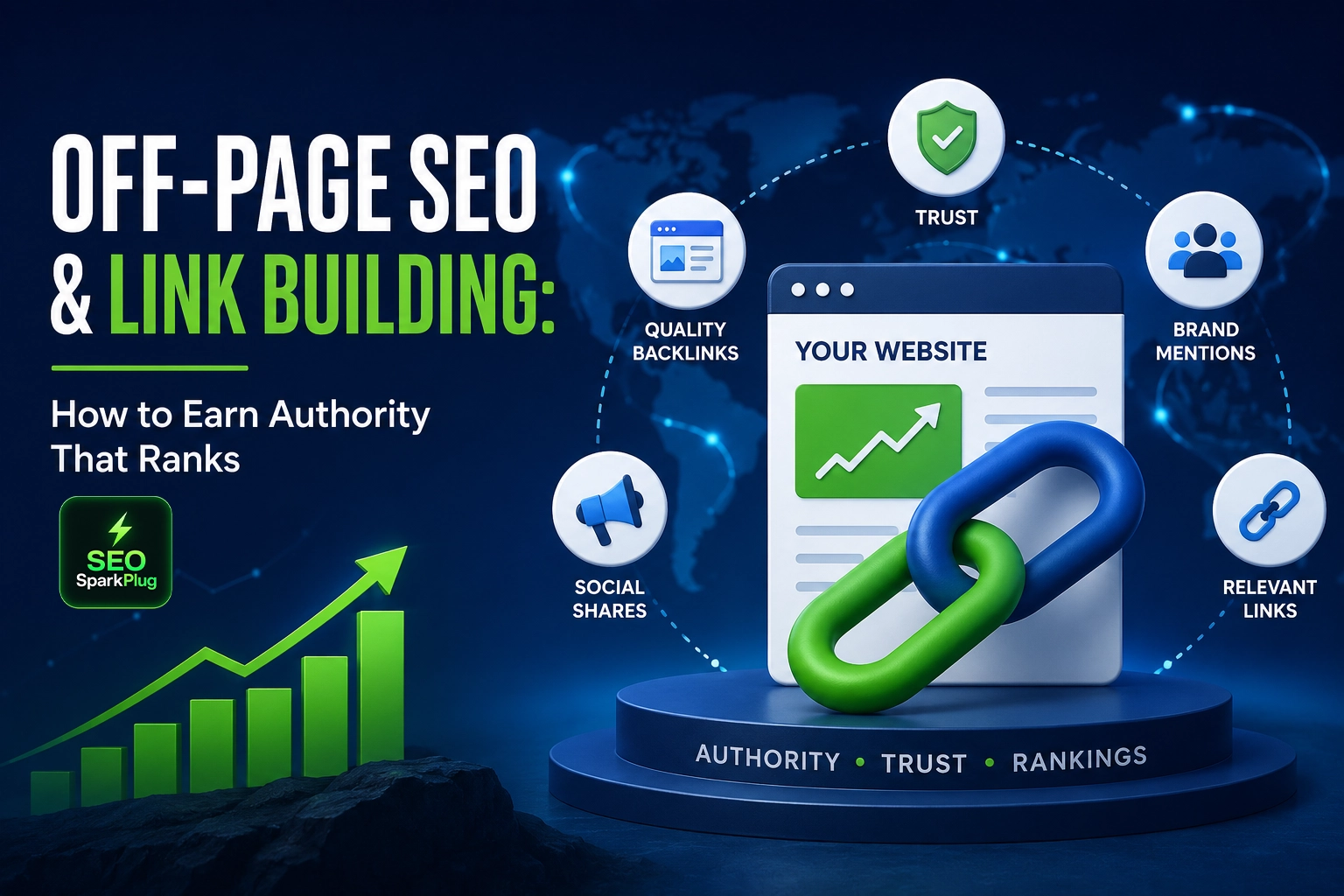
Off-Page SEO & Link Building: How to Earn Authority That Ranks
Learn how backlinks, brand mentions, digital PR, and off-page trust signals build domain authority — and which link-building tactics actually work in 2026 without risking penalties.
What Is Off-Page SEO?
Off-page SEO encompasses every signal that happens outside your website but influences how search engines judge your credibility and relevance. While on-page SEO optimizes what you publish, off-page SEO reflects what the rest of the web thinks about you — primarily through backlinks (links from other sites to yours), brand mentions, reviews, social proof, and digital PR coverage.
Google's PageRank concept still matters in modern form: pages linked by trusted, relevant sources tend to rank higher. Off-page SEO is how you earn that trust at scale. For beginners, think of it as reputation building for your domain — the more authoritative sites vouch for you, the stronger your SEO ranking potential becomes.
Why Backlinks Still Matter in 2026
Algorithm updates have reduced the impact of spammy link schemes, but high-quality backlinks remain one of the strongest ranking factors — especially in competitive niches where on-page content alone cannot differentiate ten similar pages. A single editorial link from a respected industry publication can outweigh dozens of low-quality directory listings.
- Referring domain diversity: Links from many unique, relevant domains signal broad authority.
- Link relevance: A link from a SaaS blog helps a SaaS product more than a generic forum link.
- Anchor text: The clickable words in a link hint at what your page is about — use natural variation, not exact-match spam.
- Link placement: Editorial links inside article body copy carry more weight than footer or sidebar links.
- Trust of linking site: Links from established, well-crawled domains pass more value.
Link Building vs. Link Earning
Link building is proactive outreach — you ask for or create opportunities to earn links. Link earning is passive: you publish something so useful that others link without being asked. The best off-page SEO strategies combine both. Original research, free tools, comprehensive guides (like this Learn hub), and data visualizations are classic link-earning assets.
Avoid buying links, participating in link farms, or using automated comment spam. These violate Google's spam policies and can trigger manual actions that wipe out years of SEO progress. Sustainable off-page SEO focuses on value first — links follow naturally when you deserve them.
White-Hat Link Building Tactics That Work
Digital PR and Data-Driven Stories
Publish original surveys, benchmark reports, or industry statistics journalists want to cite. A single well-promoted study can earn links from news sites, blogs, and newsletters — all high-trust sources. Pitch reporters with a clear headline and embeddable chart.
Guest Contributions and Expert Quotes
Write genuine expert articles for reputable publications in your niche. Focus on outlets your customers actually read, not random blogs that exist only to sell links. HARO-style platforms (Help a Reporter Out and alternatives) connect you with journalists seeking expert commentary — a fast path to authoritative mentions.
Resource Pages and Broken Link Building
Find industry resource lists and suggest your guide as an addition. Or identify broken links on relevant pages, notify the site owner, and offer your content as a replacement. Both tactics work because you are helping the linker, not just asking for a favor.
Partnerships and Integrations
SaaS companies often earn links from integration marketplaces, partner directories, and co-marketing pages. E-commerce brands earn links from supplier pages, local chambers of commerce, and community sponsorships. Map your real-world relationships to link opportunities.
Brand Mentions and Unlinked Citations
Not every mention includes a hyperlink, but brand mentions still reinforce entity recognition — especially for AI search systems that associate your name with topics. Monitor unlinked mentions with brand alert tools and politely request a link when the context fits. Consistent brand naming across the web strengthens both traditional SEO and AIO visibility.
Reviews, Reputation, and E-E-A-T
Off-page trust extends beyond links. Google evaluates Experience, Expertise, Authoritativeness, and Trustworthiness (E-E-A-T) using signals like third-party reviews, author credentials, Wikipedia or Wikidata presence, and expert citations. Encourage authentic customer reviews on Google, G2, Trustpilot, or industry-specific platforms. Respond professionally to negative feedback — engagement signals matter.
Measuring Off-Page SEO Progress
- Referring domains: Track growth in unique linking domains month over month.
- Domain Rating / Authority scores: Use Ahrefs, Moz, or Semrush as directional benchmarks — not absolute truth.
- Anchor text distribution: Ensure a natural mix of branded, naked URL, and topical anchors.
- Top linked pages: Identify which content attracts links and create more like it.
- Ranking movement: Correlate link wins with position changes for target keywords in Search Console.
Off-Page SEO Checklist
- Audit current backlink profile and disavow toxic spam links if necessary.
- Publish one link-worthy asset per quarter (research, tool, definitive guide).
- Build relationships with 5–10 relevant publishers or journalists in your niche.
- Claim and optimize profiles on authoritative industry directories.
- Monitor brand mentions and convert unlinked citations to links.
- Pair off-page work with strong on-page and technical SEO so earned links land on pages that can rank.
Conclusion: Authority Is Earned, Not Hacked
Off-page SEO rewards patience and genuine value. Shortcut tactics create risk; consistent publishing, real expertise, and relationship building create durable rankings. Use SEO SparkPlug to ensure the pages you promote through link building are technically sound, fast, and optimized — so every earned backlink transfers maximum ranking power to your site.