Local SEO: How to Rank in Google Maps and Local Search Results
A step-by-step guide to Google Business Profile optimization, local citations, NAP consistency, reviews, and geo-targeted content for brick-and-mortar and service-area businesses.
What Is Local SEO?
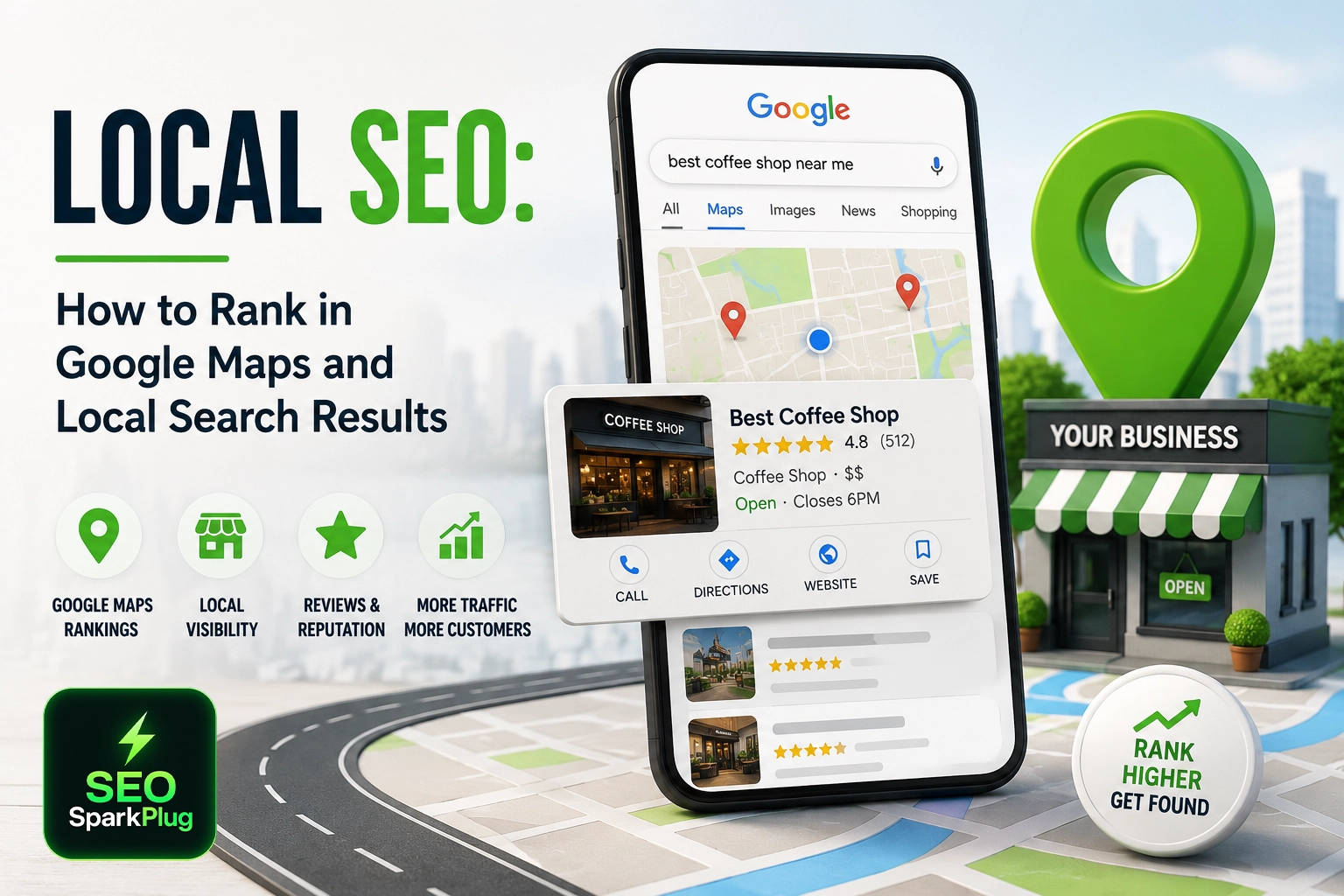
Local SEO is the practice of optimizing your online presence to attract customers from geographic searches — queries like "plumber near me," "best coffee shop in Austin," or "dentist open Saturday." These searches trigger the local pack (Google Maps results with three business listings), map pins, and localized organic results. For brick-and-mortar stores, restaurants, clinics, and service-area businesses (plumbers, electricians, cleaners), local SEO is often the highest-ROI marketing channel available.
Local SEO differs from national SEO because proximity, relevance, and prominence matter as much as traditional ranking factors. Google wants to show users businesses that are nearby, well-reviewed, and clearly relevant to the query.
Google Business Profile: Your Local SEO Hub
Google Business Profile (GBP), formerly Google My Business, is the single most important local SEO asset. Claim and verify your listing at business.google.com, then optimize every field:
- Business name: Use your real legal name — no keyword stuffing (e.g., avoid "Joe's Pizza Best NYC Pizza").
- Primary category: Choose the most specific category that matches your core service.
- Secondary categories: Add relevant additional categories without overdoing it.
- Address and service area: For storefronts, show your address. For service-area businesses, define the regions you serve.
- Hours and special hours: Keep hours accurate — wrong hours frustrate customers and hurt rankings.
- Phone and website: Use a local tracking number if needed, but keep NAP consistent everywhere.
- Description: Write a natural 750-character summary with services and location terms.
- Photos and videos: Upload high-quality images weekly — GBP rewards active profiles.
- Posts and offers: Publish GBP posts for events, promotions, and updates.
- Products and services: List individual services with descriptions and price ranges where applicable.
NAP Consistency and Local Citations
NAP stands for Name, Address, Phone. Your NAP must be identical across your website, GBP, Yelp, Apple Maps, Bing Places, Facebook, industry directories, and chamber of commerce listings. Inconsistent addresses ("Street" vs "St.", suite numbers missing, old phone numbers) confuse search engines and dilute local ranking signals.
Local citations are mentions of your NAP on third-party sites. Build citations on high-quality directories relevant to your industry and city. Avoid mass-submitting to hundreds of low-quality listing sites — quality and consistency beat quantity.
Reviews: The Local Ranking Multiplier
Reviews influence both rankings and click-through rates in the local pack. Businesses with more positive, recent reviews tend to outperform competitors with stronger websites but weak review profiles.
- Ask at the point of satisfaction: Send review requests after a completed job or purchase.
- Make it easy: Link directly to your GBP review form.
- Respond to every review: Thank positive reviewers; address negative ones professionally.
- Never buy fake reviews: Google detects and penalizes review fraud.
- Diversify platforms: Google reviews matter most, but Yelp and industry sites add trust.
Local On-Page SEO and Location Pages
Your website should reinforce local relevance. Include your city and region naturally in title tags, meta descriptions, H1 headings, and footer contact blocks. For multi-location businesses, create dedicated location pages — each with unique content, local testimonials, embedded maps, and location-specific schema markup (LocalBusiness).
Avoid duplicating the same page with only the city name swapped. Google treats thin doorway pages as spam. Write genuinely local content: neighborhood references, local case studies, community involvement, and service area details.
Local Link Building and Community Presence
Local off-page SEO includes sponsorships, local news coverage, chamber of commerce memberships, community event participation, and partnerships with nearby businesses. A link from your city's newspaper or a local nonprofit carries strong geographic relevance signals that national links cannot replicate.
Local Schema Markup
Add LocalBusiness or specific subtypes (Restaurant, Dentist, Plumber) schema to your site with matching NAP data, opening hours, geo coordinates, and price range. Schema helps search engines disambiguate your entity and can enable rich results. Validate markup with Google's Rich Results Test.
Tracking Local SEO Performance
- GBP Insights: Monitor views, searches, calls, direction requests, and website clicks.
- Local pack rankings: Track positions for geo-modified keywords ("keyword + city").
- Search Console: Filter performance by queries containing city or "near me" terms.
- Call tracking: Attribute phone leads to local SEO efforts.
- Review velocity: Track new reviews per month and average rating trend.
Local SEO Checklist
- Claim, verify, and fully complete Google Business Profile.
- Audit NAP consistency across top 20 citation sources.
- Implement LocalBusiness schema on your website.
- Build a review generation process with staff training.
- Create or improve location-specific landing pages with unique content.
- Earn 3–5 local links from community or industry sources this quarter.
- Run a technical audit to ensure mobile speed and crawlability are solid.
Conclusion: Win the Map Pack Before You Win the Nation
Local SEO puts your business in front of buyers ready to act — often on mobile, often within miles of your door. Master GBP, reviews, and NAP consistency first; layer on local content and links second. SEO SparkPlug helps you audit the technical and on-page health of your location pages so local traffic converts when it arrives.