
Measuring SEO Success: Search Console, Analytics & the KPIs That Matter
Understand which SEO metrics to track, how to use Google Search Console and analytics tools, and how to connect rankings and traffic to real business outcomes.
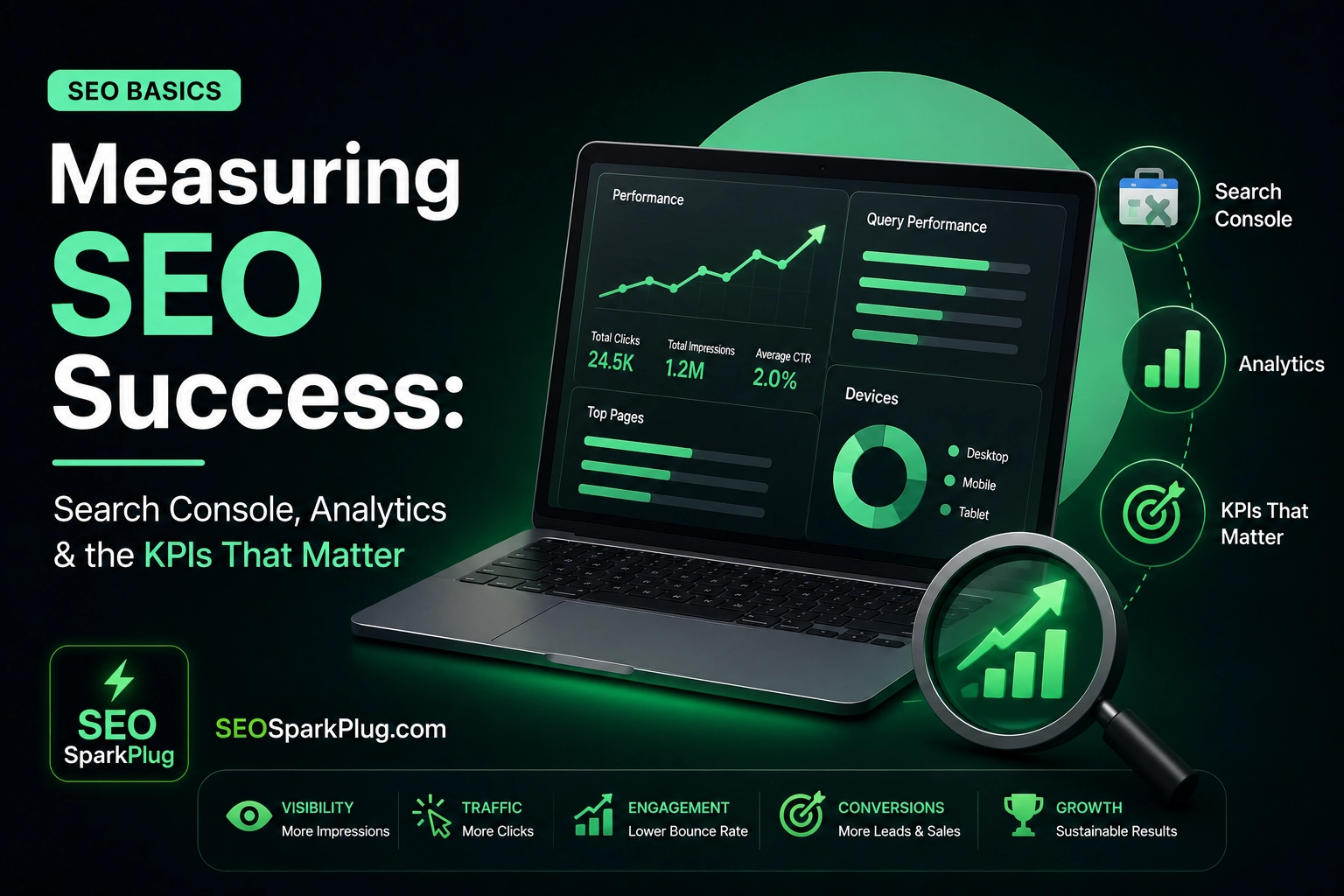
Why SEO Measurement Matters
SEO without measurement is guesswork. Rankings fluctuate daily, algorithm updates reshape the SERP, and traffic alone does not prove business impact. A solid analytics practice connects search visibility to outcomes you care about — leads, sales, sign-ups, and revenue — so you know which SEO investments deserve more budget and which pages need fixing.
Beginners often obsess over a single keyword position. Professionals track portfolios of metrics: impressions, clicks, click-through rate (CTR), average position, indexed pages, Core Web Vitals, conversions, and assisted conversions. This guide explains what each metric means and which tools to use.
Google Search Console: Your Primary SEO Data Source
Google Search Console (GSC) is free and shows how Google sees your site. Verify domain ownership, submit your XML sitemap, and review these core reports:
Performance Report
- Impressions: How often your pages appeared in search results.
- Clicks: How often users clicked through to your site.
- CTR: Clicks divided by impressions — low CTR may mean weak titles or meta descriptions.
- Average position: Mean ranking position — directional, not exact per user.
Filter by query, page, country, device, and date range. Compare periods to spot trends after content updates or technical fixes. Export data monthly for reporting.
Indexing and Coverage
The Pages report shows which URLs Google indexed, excluded, or failed to crawl. Fix "Crawled — currently not indexed" issues by improving content quality and internal links. Resolve errors (404s, server errors, redirect chains) promptly — they waste crawl budget and block rankings.
Experience and Core Web Vitals
GSC reports real-user LCP, INP, and CLS data for URLs with sufficient traffic. Pair this with lab data from Lighthouse or SEO SparkPlug audits to catch issues before they affect rankings at scale.
Google Analytics and Conversion Tracking
Search Console shows search behavior; Google Analytics (GA4) shows on-site behavior. Connect GSC to GA4 for unified reporting. Define key events — form submissions, purchases, demo requests, free trial sign-ups — and mark them as conversions.
- Organic traffic segment: Filter Acquisition reports to organic search only.
- Landing page performance: See which entry pages drive engagement and conversions.
- Assisted conversions: SEO often starts the journey; multi-touch models credit organic fairly.
- Engagement rate and bounce patterns: High traffic with low engagement signals content mismatch with search intent.
UTM parameters are for paid and email campaigns — avoid tagging organic URLs in a way that splits your natural search data unnecessarily.
The SEO KPIs Worth Tracking Monthly
- Organic sessions and conversions: Top-line growth and business impact.
- Keyword visibility: Share of target keywords in positions 1–10 and 1–3.
- Indexed page count: Should grow with quality content, not explode with thin pages.
- CTR by page: Identify pages ranking well but failing to earn clicks.
- Technical error count: Track crawl errors, broken links, and CWV failures over time.
- Backlink growth: New referring domains from off-page efforts.
- Revenue or pipeline from organic: For e-commerce, track organic revenue; for B2B, track qualified leads.
Ranking Trackers and Third-Party Tools
Search Console average position is useful but aggregated. Dedicated rank trackers (Ahrefs, Semrush, AccuRanker, etc.) check specific keywords daily from chosen locations. Use them for campaign keywords, not every long-tail variant — focus on terms with commercial intent and measurable volume.
SEO audit tools like SEO SparkPlug complement GSC by scoring on-page issues, AIO readiness, and technical health in one pass — ideal for prioritizing fixes before you wait weeks for ranking data to move.
Building an SEO Report That Stakeholders Understand
Executives do not need 50 keyword positions — they need narrative plus numbers. Structure monthly reports as:
- Executive summary: 3 bullets on wins, risks, and next actions.
- Traffic and conversions: Month-over-month and year-over-year organic trends.
- Visibility highlights: New page-one rankings or featured snippet wins.
- Work completed: Content published, technical fixes shipped, links earned.
- Planned experiments: What you will test next and expected timeline.
Common Measurement Mistakes to Avoid
- Judging SEO weekly: Meaningful ranking changes often take 8–12 weeks.
- Ignoring seasonality: Compare to the same month last year, not just last month.
- Tracking vanity metrics only: Traffic without conversions misallocates effort.
- Not segmenting branded vs non-branded: Brand searches inflate organic performance; non-branded shows SEO reach.
- Forgetting mobile and country splits: Aggregate data hides device-specific regressions.
Conclusion: Measure, Fix, Repeat
SEO analytics turns optimization from art into a feedback loop. Start with Search Console and GA4 — both free — then layer audits and rank tracking as your program matures. SEO SparkPlug gives you actionable scores and prioritized fixes so every reporting cycle ends with a clear to-do list, not just charts. What gets measured gets improved.