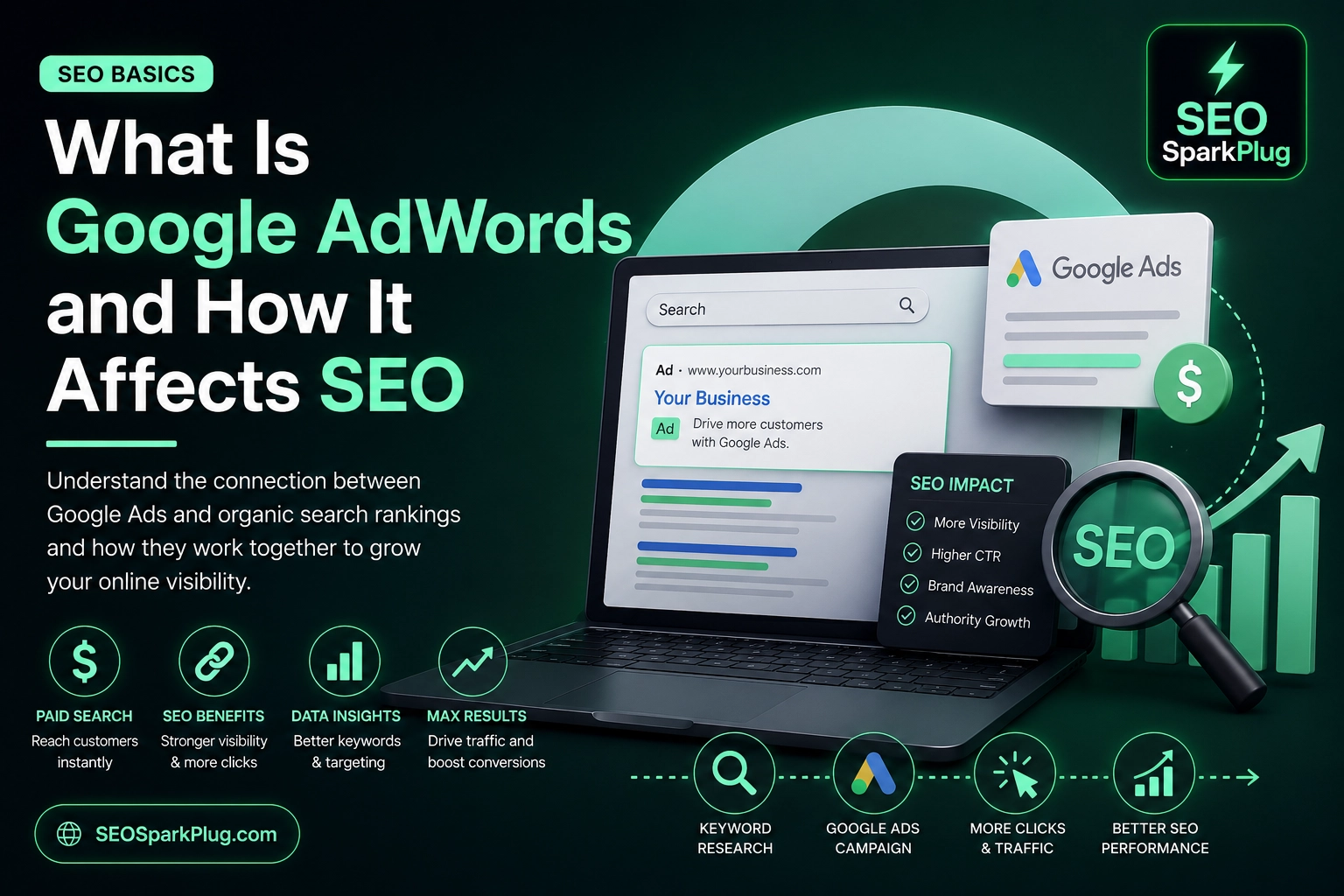
SEO Basics: What Is Google AdWords and How It Affects SEO
Discover how Google Ads works, the relationship between paid advertising and organic SEO, and how they improve overall search visibility.
Understanding Google Ads and Its Relationship with SEO
Google Ads (formerly known as Google AdWords) is Google's online advertising platform that allows businesses to display ads in Google search results and across Google's advertising network. While Google Ads is a paid advertising tool and SEO focuses on organic search results, understanding how they interact is crucial for comprehensive search marketing strategy. Both can work together to improve your overall search visibility and SEO performance.
What Is Google Ads (AdWords)?
Google Ads is a pay-per-click (PPC) advertising platform where businesses bid on keywords to have their ads displayed in Google search results and on partner websites. Key features include:
- Keyword-based targeting: Advertisers choose keywords relevant to their business
- Cost-per-click (CPC) bidding: You pay when users click your ads
- Immediate visibility: Ads appear in search results immediately upon setup
- Advanced targeting options: Location, demographics, device types, and more
- Performance tracking: Detailed analytics on clicks, impressions, conversions, and ROI
How Google Ads Differs from SEO
Understanding the differences between Google Ads and SEO helps clarify their distinct roles:
Google Ads (Paid Search)
- Immediate results: Ads can appear instantly after campaign setup
- Cost per click: You pay for each click on your ads
- Limited duration: Ads only show while campaigns are active and budgeted
- Predictable traffic: Budget directly controls ad visibility
- Above organic results: Ads typically appear at the top of search results (marked as "Ad")
SEO (Organic Search)
- Long-term results: SEO ranking improvements typically take 3-6 months
- No direct click costs: Organic traffic is free (though requires ongoing optimization efforts)
- Sustainable traffic: Well-optimized content can rank for years
- Unpredictable growth: SEO ranking depends on many factors beyond direct control
- Below ads: Organic results appear below paid ads in search results
How Google Ads Affects SEO
While Google Ads doesn't directly improve your organic SEO ranking, it can indirectly influence your SEO performance in several ways:
1. Increased Brand Awareness
Google Ads increases your brand visibility, which can lead to more brand searches. When users search for your brand name (brand keywords), these searches can improve your SEO ranking for brand terms and signal brand authority to search engines.
2. Data Insights for SEO Strategy
Google Ads provides valuable data about which keywords perform well, user behavior, and conversion patterns. This keyword analysis data can inform your SEO strategy, helping you optimize content for terms that drive conversions and improve your SEO ranking for high-value keywords.
3. Landing Page Optimization
Optimizing landing pages for Google Ads often involves improving user experience, page speed, and content quality—factors that also positively impact your SEO ranking. Well-optimized ad landing pages can rank organically, improving your overall SEO performance.
4. Competitive Keyword Intelligence
Running Google Ads campaigns reveals which keywords competitors target and how they position themselves. This competitive intelligence can guide your organic SEO strategy and help you identify keyword opportunities to improve your SEO ranking.
5. Testing Content and Messaging
Google Ads allows you to quickly test different headlines, descriptions, and messaging. Winning ad copy can inform your SEO content strategy, helping you create meta descriptions and titles that improve click-through rates and potentially your SEO ranking.
The Relationship: Paid vs. Organic SEO
Google has stated that paid search results do not directly influence organic SEO ranking. However, they work together in a comprehensive search marketing strategy:
Complementary Strategy
Google Ads and SEO can complement each other effectively:
- Coverage: Ads can target keywords while you build organic SEO ranking
- Immediate + long-term: Ads provide immediate traffic while SEO builds sustainable organic growth
- Testing: Use ads to test keyword viability before committing to long-term SEO efforts
- Brand protection: Ads ensure visibility even when organic SEO ranking fluctuates
Unified Keyword Strategy
Both Google Ads and SEO require keyword research. Using the same keyword analysis across both channels ensures consistent messaging and helps identify terms worth targeting organically to improve your SEO ranking.
Using Google Ads Data to Improve SEO
Google Ads provides actionable data that can enhance your SEO efforts:
1. Keyword Performance Analysis
Identify which keywords in your Google Ads campaigns have high conversion rates. These high-performing keywords are prime candidates for SEO optimization to improve your organic SEO ranking.
2. Search Query Reports
Review actual search queries that triggered your ads. These reveal user intent and can uncover keyword opportunities for SEO content creation that can improve your SEO ranking.
3. Geographic Performance
Understand which locations perform best in ads. This data can guide local SEO strategies and help improve your SEO ranking in specific markets.
4. Device Performance
See which devices convert best. This informs mobile SEO optimization, which directly impacts your SEO ranking in Google's mobile-first index.
Best Practices for Integrating Google Ads and SEO
To maximize the benefits of both Google Ads and SEO:
1. Consistent Messaging
Align your ad copy with your SEO content. Consistent messaging across paid and organic results strengthens brand recognition and can support your SEO ranking efforts.
2. Unified Tracking
Use the same analytics platform to track both paid and organic performance. Understanding the full customer journey helps optimize both channels and improve overall SEO ranking strategy.
3. Landing Page Optimization
Optimize landing pages for both ads and organic traffic. Fast-loading, user-friendly pages with quality content improve user experience, supporting both ad performance and SEO ranking.
4. Keyword Coordination
Coordinate keyword strategies between ads and SEO. Use ads for highly competitive terms while building organic SEO ranking for long-tail and less competitive keywords.
Common Misconceptions
Important clarifications about Google Ads and SEO:
- Paying for ads doesn't improve SEO ranking: Google maintains separate systems for paid and organic results
- Ads don't steal clicks from organic: Many users click ads; many prefer organic results; both can benefit your business
- Running ads won't hurt SEO: There's no evidence that advertising negatively impacts organic SEO ranking
- Organic SEO is still essential: Even with ads, organic SEO ranking provides sustainable, cost-effective traffic
Tools for Managing Both Channels
Effective management of both Google Ads and SEO requires the right tools:
- Google Analytics: Track both paid and organic performance in one platform
- SEO dashboard tools: Monitor organic SEO ranking alongside paid performance
- Keyword research tools: Unified keyword analysis for both channels
- Competitor analysis platforms: Understand both paid and organic competitive landscape
Conclusion: A Unified Search Strategy
Google Ads and SEO are not competitors—they're complementary tools in a comprehensive search marketing strategy. While Google Ads provides immediate paid visibility, SEO builds long-term organic SEO ranking that generates sustainable traffic. By understanding how Google Ads affects your overall search presence and using its data to inform your SEO strategy, you can create a unified approach that maximizes both immediate results and long-term SEO ranking improvements.
The key is using Google Ads data and insights to inform your SEO efforts, optimizing landing pages for both channels, and maintaining consistent messaging. With the right strategy, Google Ads and SEO work together to improve your overall search visibility, brand awareness, and ultimately, your SEO ranking performance.
Related guides
What is SEO? A Complete Guide to Search Engine Optimization
Learn the fundamentals of SEO, how search engines work, and why SEO is essential for online visibility and business growth in 2026.
Read article →
SEO Fundamentals: A Comprehensive Guide to Keywords
Learn how keywords form the foundation of SEO, how to conduct keyword research, and why targeting the right terms drives organic traffic.
Read article →