
SEO Fundamentals: A Comprehensive Guide to Keywords
Learn how keywords form the foundation of SEO, how to conduct keyword research, and why targeting the right terms drives organic traffic.
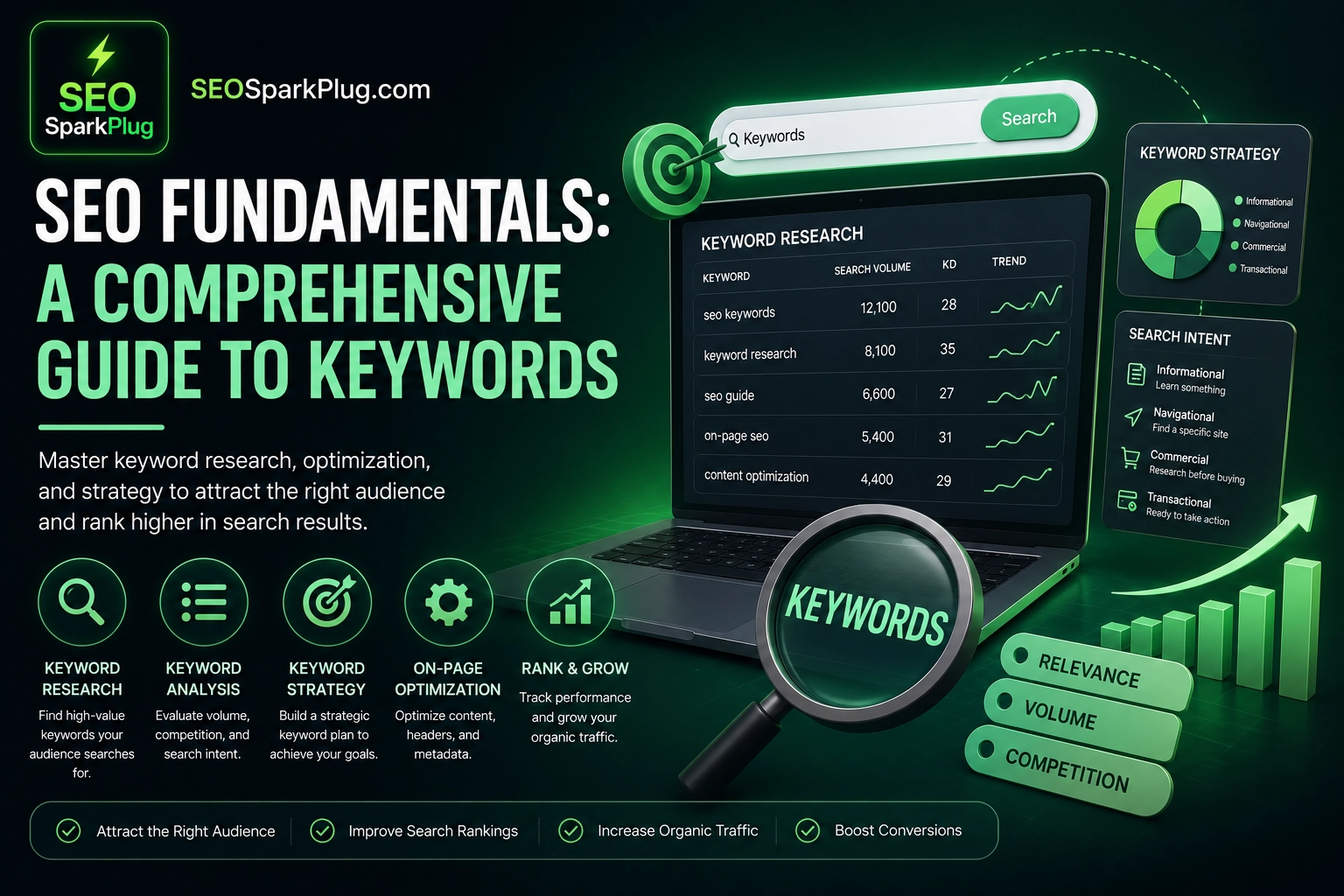
SEO Fundamentals: A Comprehensive Guide to Keywords
Keywords serve as the backbone of effective SEO strategies, bridging user intent with your website's content. In this guide, we delve into the significance of keywords and how mastering them can elevate your SEO ranking and drive organic traffic to your site.
Understanding Keywords: Pillar of SEO Success
Keywords, the phrases users input into search engines, play a pivotal role in SEO. They act as the conduit connecting user queries to your website's content. Grasping the essence of keywords and employing them strategically is imperative for enhancing your SEO performance.
Essential Insights into Keywords
Keywords encompass specific terms or phrases users utilize in search engines like Google to seek information. They fall into various categories:
- Short-tail keywords: Concise terms or phrases, typically 1-2 words (e.g., "SEO", "marketing")
- Long-tail keywords: Detailed, specific phrases, usually 3+ words (e.g., "top SEO tools for small businesses")
- Brand keywords: Terms incorporating your brand name (e.g., "Nike shoes", "Apple iPhone")
- Location-based keywords: Phrases incorporating geographic locations (e.g., "SEO services in New York")
- Intent-based keywords: Terms mirroring users' intentions (e.g., "how to enhance SEO", "purchase SEO software")
Significance of Keywords in SEO
Keywords wield significant influence over your SEO ranking due to the following reasons:
1. Enhanced Search Engine Comprehension
Relevant keywords aid search engines in deciphering your content, thereby refining the indexing process and boosting your ranking for specific terms.
2. Alignment with User Intent
Strategic keyword deployment aligns your content with user queries, ensuring improved visibility in search results and heightened user satisfaction.
3. Indicators of Content Relevance
Thoughtful keyword placement in title tags, meta descriptions, headers (H1, H2, H3), and content sends strong signals to search engines regarding your page's relevance, directly impacting your SEO ranking.
4. Competitive Edge
Astute keyword research and optimization unveil opportunities overlooked by competitors. Focusing on less competitive yet high-value keywords can expedite SEO ranking enhancements over targeting fiercely competitive terms.
How Keyword Research Works
Keyword research involves finding and analyzing terms people use in search engines. Effective keyword research includes:
- Identifying Search Volume: Understand the search volume of specific keywords.
- Analyzing Competition: Evaluate the difficulty of ranking for keywords.
- Understanding User Intent: Determine users' intentions when searching.
- Finding Keyword Variations: Discover related terms and synonyms.
- Analyzing Keyword Trends: Identify keyword popularity trends.
Modern SEO tools and platforms simplify keyword research by providing data on search volumes, competition levels, and related keywords to enhance SEO rankings.
Types of Keywords for Different SEO Goals
1. Informational Keywords
Used by those seeking information (e.g., "what is SEO"). Targeting these keywords helps establish authority and improve SEO rankings for educational content.
2. Navigational Keywords
Used by users searching for specific brands or websites. Ranking for brand-related keywords can significantly impact SEO rankings for brand searches.
3. Transactional Keywords
Indicate purchase intent (e.g., "buy SEO software"). Valuable for e-commerce and can boost SEO rankings for commercial queries.
4. Commercial Investigation Keywords
Used by users comparing options before buying. Targeting these keywords can boost SEO rankings for comparison searches.
Best Practices for Keyword Optimization
To enhance SEO rankings with keywords, follow these practices:
1. Natural Integration
Use keywords naturally; avoid stuffing.
2. Strategic Placement
Include keywords in title tags, H1 headings, meta descriptions, and content.
3. Utilize Synonyms
Use related terms and synonyms.
4. User Intent
Align keywords with user intent.
5. Long-Tail Strategy
Focus on long-tail keywords for targeted traffic.
Common Keyword Mistakes to Avoid
Avoid these mistakes to maintain SEO rankings:
- Keyword stuffing
- Ignoring user intent
- Neglecting long-tail keywords
- Not updating keyword strategy
- Ignoring local keywords
Tools for Keyword Research
Effective keyword research tools include:
- Google Keyword Planner
- Google Trends
- SEO dashboard platforms
- Competitor analysis tools
- Keyword research tools
Measuring Keyword Performance
Track these metrics to understand keyword impact on SEO rankings:
- Keyword rankings
- Organic traffic
- Click-through rates
- Conversion rates
- Keyword performance trends
Modern SEO tools and dashboards offer comprehensive keyword tracking to monitor SEO ranking improvements.
Conclusion: Importance of Keywords in SEO Success
Keywords play a crucial role in achieving SEO success. They serve as the bridge between your content and search engines, enabling you to reach users interested in your offerings and influencing your SEO ranking directly. Through meticulous keyword research, strategic content optimization, and continuous performance monitoring, you can elevate your SEO ranking and attract organic traffic to your website.
It's essential to understand that effective keyword optimization goes beyond mere inclusion; it involves grasping user intent, crafting valuable content that seamlessly integrates relevant keywords, and leveraging SEO tools to enhance your ranking progressively. With a well-thought-out keyword strategy, sustainable SEO ranking enhancements and enduring organic growth are within reach.
Related guides
What is SEO? A Complete Guide to Search Engine Optimization
Learn the fundamentals of SEO, how search engines work, and why SEO is essential for online visibility and business growth in 2026.
Read article →
SEO Basics: What Is Google AdWords and How It Affects SEO
Discover how Google Ads works, the relationship between paid advertising and organic SEO, and how they improve overall search visibility.
Read article →