
Executive summary
An SEO case study on how Shopify uses merchant education, category page architecture, and faceted navigation controls to rank commercial searches.
The pattern matters because it can usually be adapted to smaller sites. The constraint is not traffic opportunity. The constraint is whether each page adds enough distinct value to deserve indexation and links.
Why Shopify covers both commercial and informational demand
Shopify’s content ecosystem supports different stages of merchant intent. Educational resources help users understand the business problem, while category and product-adjacent pages address commercial solution queries.
That creates a broader acquisition system than relying on transactional pages alone.
- Commercial pages align with purchase-oriented searches.
- Guides and resources earn links and widen discoverability.
- Internal links help informational authority support commercial URLs.
How architecture and filters affect rankings
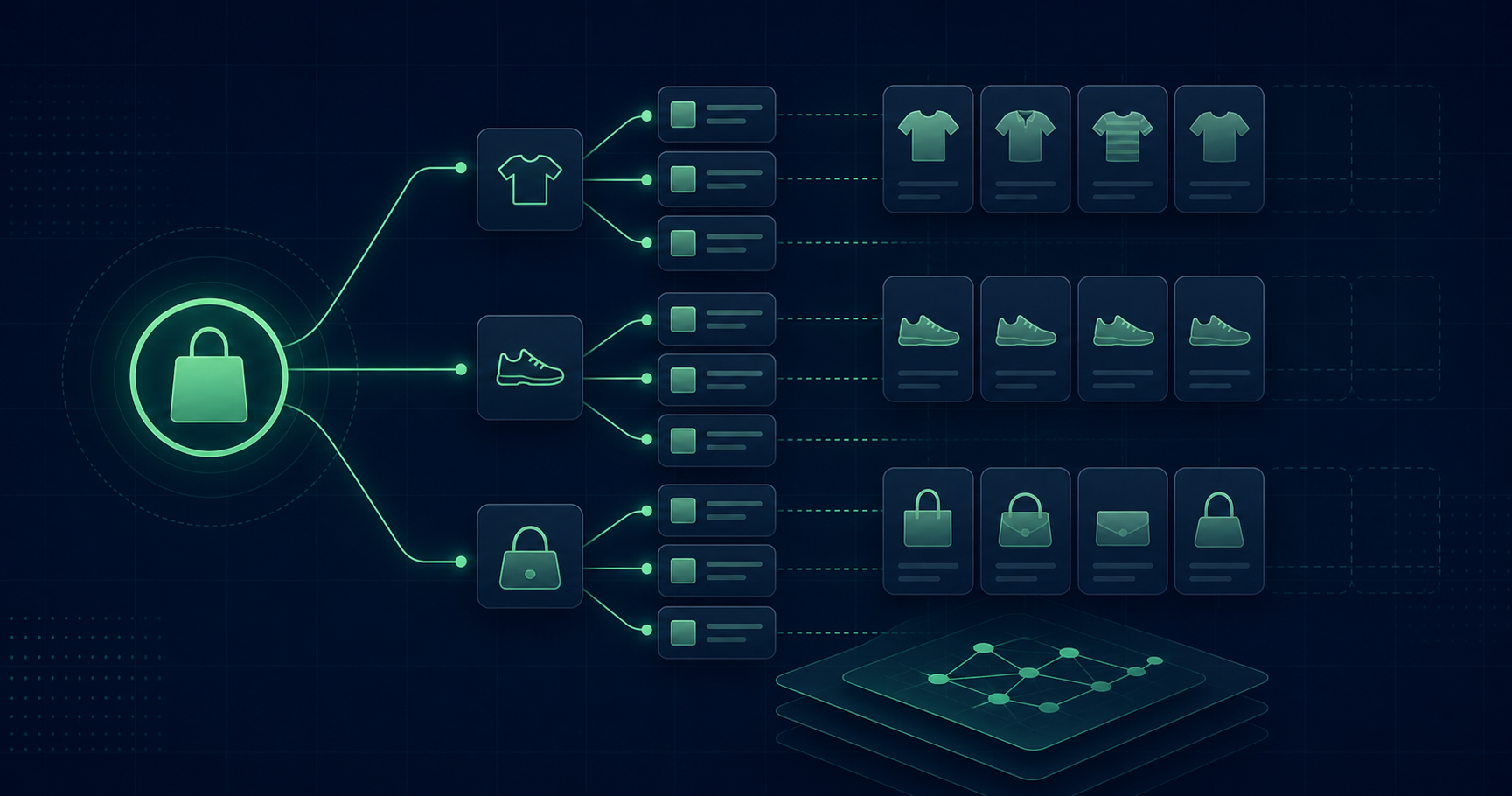
For e-commerce-style SEO, page templates and facet behavior are decisive. Collection pages need enough unique value to rank, while filtered combinations need careful indexation rules.
Shopify’s model highlights the importance of balancing UX flexibility with crawl discipline.
- Strong collection or PLP templates aligned to modifiers.
- Helpful page modules like FAQs, comparisons, and guidance.
- Controlled handling of filtered states and duplicated combinations.
What to apply on your own site
If you run a catalog or inventory-heavy site, prioritize the pages that map to your most valuable commercial intents and make those pages more complete.
Then use educational content to support them strategically rather than publishing content in isolation.
- Strengthen high-value category pages before expanding low-value ones.
- Decide which facet combinations deserve indexation.
- Link educational content into commercial hubs intentionally.
- Measure category page visibility and conversion together.
SEO takeaways for your team
- Match each page to a distinct intent pattern before scaling it.
- Use internal links to reinforce the pages that should rank, not just to fill navigation.
- Control duplicate states, thin variations, and weak URLs before they accumulate.
- Support ranking pages with adjacent educational content where it strengthens authority.
FAQ
Why is category architecture so important in e-commerce SEO?
Category and collection pages often target the highest-value commercial queries, so their structure, filters, copy, and crawlability have an outsized effect on revenue-focused rankings.
What does Shopify do beyond category pages?
Shopify supports commercial pages with educational content that earns links, captures informational traffic, and builds authority around merchant-related topics.
Apply the pattern on your site
Use SEO Sparkplug to audit technical issues, improve page structure, and find the internal linking and content gaps that block rankings.